Resources
Spell to Write & Read
This teacher's manual, written by a homeschool educator with experience as a professional school teacher and private tutor, shows how to teach reading the "write" way. By phonetically teaching spelling from the start as the backbone for reading, all children can be taught, regardless of learning styles, to read and spell. If your student knows how to read already, this program can improve his or her spelling. Find out more about this product here.
Sing, Spell, Read & Write
Sing, Spell, Read & Write is a phonics-based program that uses a 36-step program of carefully sequenced steps to teach reading, writing, and spelling. More product information can be found here.
Learning Language Arts Through Literature
Learning Language Arts Through Literature is a fully integrated language arts program that teaches grammar, reading, spelling, vocabulary, writing mechanics, creative writing, thinking skills and more.
A Reason For® Spelling
A Reason For® Spelling combines the latest research on how children learn to spell with all the strengths of traditional programs. It teaches highfrequency base words, plus hundreds of other word forms. Values-based stories set the theme each week and help make spelling fun. You'll find product information about A Reason For® Spelling here.
Spelling for the Homeschooled Student
Scripps National Spelling Bee
Scripps National Spelling Bee is the most widely known spelling bee organizer in the world. In general, the program is open to students who have not reached their 16th birthday on or before the date of the national finals and who have not passed beyond the eighth grade at the time of their school finals.
How to Teach Spelling in Your Homeschool
Homeschooling is a great opportunity because you can choose the homeschool spelling curriculum that matches your child's needs. As your child's teacher, you decide the method of instruction, how frequent the lessons are, the pace, the intensity, and the amount of review. No one else can do that for your child! For all children, from those needing remedial help to those who are gifted in this area, individualized spelling instruction is an unbeatable choice.
PBS Kids Spelling Games
Your kids can practice spelling with these online games.
When Should I Start Teaching Spelling in Homeschool?
Spelling is more than just associating letters with sounds and deciphering them. Spelling is an essential element to writing clearly and convincingly. Some programs start testing children right away like at Kindergarten level. However, instead of teaching spelling, a program may add the element of testing.
Teaching spelling is one thing and testing spelling is quite another thing.
How I Teach a Large Family in a Relaxed, Classical Way: Language Arts
Tips for teaching language arts (writing, grammar, handwriting) in a large family.
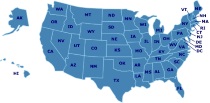
Looking for Another State?
Featured Resources
As an Amazon Associate, we earn from qualifying purchases. We get commissions for purchases made through links on this site.

Pattern Blocks and Boards
This set of 10 simply designed colorful wooden blocks and pattern boards includes 100 blocks in six different shapes and colors. They help develop shape recognition and spatial relationship skills. The contents store neatly in a durable wooden case. This games was awarded the Scholastic Parent & Child's 2004 "Top 22 Toys that Make Kids Think" award.

Discover Your Children's Gifts
This comprehensive work on children's learning styles and creativity expression is a tremendous help to parents as they begin homeschooling. The authors discuss how God gifts children in different ways with different ways of learning and expression. This guide will help you identify your child's personality gifts and help them reach their full potential.

Perrine's Sound & Sense: An Introduction to Poetry
Perrine's Sound and Sense is a fantastic book for studying poetry with your children. It is a great resource for high school students. It includes clear and thorough explanations of devices, forms, how to analyze poetry, and more, as well as a huge variety of poems, both classic and contemporary.

Taking Charge of Your Child's Education: A Guide to Becoming the Primary Influence in Your Child's Life
Every parent wants to give their child the best start in life. The best way to do that is to get fully involved in their educational process as their primary influence. This book is full of helpful information, resources, and tools that will lead you to home education success. Erica Arndt recognizes that the most important factor is the family unit relationships. This book will help you as you make your decision to homeschool.

Montessori: A Modern Approach
Montessori: A Modern Approach has been called the single best book for anyone -- educator, childcare professional, and especially parent -- seeking answers to the questions: What is the Montessori method? Are its revolutionary ideas about early childhood education relevant to today's world? And most important, especially for today's dual-career couples. Is a Montessori education right for my child?Paula Polk Lillard writes both as a trained educators and as a concerned parent -- she has many yea...