Colleges & Careers
More and more universities and colleges welcome and encourage applications from homeschoolers. We'll help you understand the process of applying for college and the special needs of homeschoolers, including preparing transcripts, entering college early, and working with institutions that may not be used to unconventional learning models.
What's Popular
Recognizing Home School Diplomas for College Admittance and Financial Aid
Colleges and universities frequently ask two questions about home schoolers: (1) Are home schoolers eligible for financial aid without obtaining a GED or passing an ability-to-benefit test? and (2) Can a university admit a student with a home school high school diploma who is under the age of compulsory attendance and still retain its eligibility for federal funding? The answer to both questions is “Yes.” This analysis of the Higher Education Act Amendments of 1998 explains what post-secondary s...
How Do Home School Graduates Enter the Military?
Article includes anecdotes and information about joining the military without a high school diploma.
Ten Things High School Grads Need to do Before Leaving for College
Congratulations! You are preparing to head off to your college campus for the first time! What an exciting, and scary!, time this is. Here are a few things for you to take care of so you'll be ready when you arrive. This great list includes information about financial aid, jobs, resumes, finances, organization, and more.
The SAT vs. the ACT: Which to Choose?
Colleges will accept either the SAT or ACT. So which should you take? It's all about the numbers. Some students end up scoring substantially higher on the SAT; others do better on the ACT. The Princeton Review Assessment (PRA) is designed to help you determine which test is better fit with your abilities.
Blog, She Wrote: Embracing the Independent and Authentic Nature of Homeschooling
This extensive blog offers support for parents homeschooling through high school, with information on planning high school homeschool, creating electives, preparing for college, writing essays, teaching science, navigating college selection, and more!
Board of Regents of the University System of Georgia
The Board of Regents of the University System of Georgia supervises and regulates the activities of the thirty-two institutions of the University System. Of particular interest and concern to homeschoolers is the fact that the Board of Regents specifies a "college preparatory curriculum" as a requirement for admission, and other admissions requirements.
American Association of Community Colleges (AACC)
Founded in 1920, the American Association of Community Colleges (AACC) has, over four decades, become the leading proponent and the national “voice for community colleges.” Today, AACC’s membership represents close to 95 percent of all accredited U.S. two-year community, junior and technical colleges and their 10.5 million students, as well as a growing number of international members in Puerto Rico, Japan, Great Britain, Korea, and the United Arab Emirates. The colleges are the largest and fas...
For Such a Time as This
For Such a Time as This offers curriculum assistance, distance learning, and college admission consulting.
Analysis of Inequities in the Requirements for Admission to the University System of Georgia
This report outlines and contrasts admission requirements for graduates of accredited or regulated high schools (accredited applicants) with admission requirements for applicants who are not graduates of accredited or regulated high schools (non-accredited applicants). Non-accredited applicants include students with a Graduation Equivalency Diploma (GED), most students from home study programs, and students from high schools, such as parochial schools, that, usually by choice, are not accredited...
Home-Schooled Students & Admission: Your Child's Unique Approach to the Process
Each college evaluates home-schooled applicants differently. Some colleges admit many home schoolers. Others have yet to admit one. Either way, your child needs to take extra admission steps.
Coalition for Equitable USG Admissions
Coalition for Equitable USG Admissions' purpose is to achieve an admissions policy for applicants who are not graduates of accredited high schools that is appropriate and equitable.
University System of Georgia
The University System of Georgia offers students higher education options at 34 institutions throughout the state, providing a wide range of academic programming, including certificates, associate, baccalaureate, master's, doctoral and professional degrees.
HOPE Scholarships
This list of links provides information to homeschoolers regarding HOPE scholarships.

And What About College?: How Homeschooling Can Lead to Admissions to the Best Colleges & Universities
Get all your questions about helping your homeschooled student apply and get accepted to college answered with this resource. It discusses transcripts, diplomas, education choices, online colleges, and more. If you are worried about whether your homeschooled student can have a successful college search, then this book will help allay those fears and offers good support and information.
Annie & Everything
Ann Karako offers support and guidance for families with homeschooling teenagers. With articles, support, and resources, you'll find the information and confidence you need to homeschool your high school student here.
Resources
Blog, She Wrote: Embracing the Independent and Authentic Nature of Homeschooling
This extensive blog offers support for parents homeschooling through high school, with information on planning high school homeschool, creating electives, preparing for college, writing essays, teaching science, navigating college selection, and more!
And What About College?: How Homeschooling Can Lead to Admissions to the Best Colleges & Universities
Get all your questions about helping your homeschooled student apply and get accepted to college answered with this resource. It discusses transcripts, diplomas, education choices, online colleges, and more. If you are worried about whether your homeschooled student can have a successful college search, then this book will help allay those fears and offers good support and information.
Annie & Everything
Ann Karako offers support and guidance for families with homeschooling teenagers. With articles, support, and resources, you'll find the information and confidence you need to homeschool your high school student here.
Links
Ten Things High School Grads Need to do Before Leaving for College
Congratulations! You are preparing to head off to your college campus for the first time! What an exciting, and scary!, time this is. Here are a few things for you to take care of so you'll be ready when you arrive. This great list includes information about financial aid, jobs, resumes, finances, organization, and more.
5 Essential Keys to Your Perfect College Search
The whole college selection process can be a daunting challenge for Catholic families, both to those searching for the first-time, and even to those who have gone through the process before. Going to college can change a person’s life forever, including where he ends up for eternity. After all those years of sacrificing to give their children the best possible Catholic education, many parents are confronted with a huge decision. This advice will help prospective college students and their parents make this decision.
The College Board
The College Board is a not-for-profit membership association whose mission is to connect students to college success and opportunity. Founded in 1900, the association is composed of more than 4,700 schools, colleges, universities, and other educational organizations. Each year, the College Board serves over three and a half million students and their parents, 23,000 high schools, and 3,500 colleges through major programs and services in college admissions, guidance, assessment, financial aid, enrollment, and teaching and learning. Among its best-known programs are the SAT, the PSAT/NMSQT®, and the Advanced Placement Program®(AP).
For Such a Time as This
For Such a Time as This offers curriculum assistance, distance learning, and college admission consulting.
Coalition for Equitable USG Admissions
Coalition for Equitable USG Admissions' purpose is to achieve an admissions policy for applicants who are not graduates of accredited high schools that is appropriate and equitable.
Analysis of Inequities in the Requirements for Admission to the University System of Georgia
This report outlines and contrasts admission requirements for graduates of accredited or regulated high schools (accredited applicants) with admission requirements for applicants who are not graduates of accredited or regulated high schools (non-accredited applicants). Non-accredited applicants include students with a Graduation Equivalency Diploma (GED), most students from home study programs, and students from high schools, such as parochial schools, that, usually by choice, are not accredited. Of these legitimate, non-accredited secondary programs, many provide innovative, individualized curricula and instructional methods distinct from those offered by government-operated secondary schools. Prepared by the Home Education Information Resource (HEIR).
Colleges that Admit Homeschoolers FAQ
Wondering which colleges admit homeschoolers? The list is growing every day. This compilation by Learn in Freedom lists more than 1,000 schools of higher education with links to over 980 college Web sites.
Articles
Admissions Decision-Making Models: How U.S. Institutions of Higher Education Select Undergraduate Students
This report examines how institutions make admissions decisions. Information from more than 100 institutions, representing all levels of selectivity, forms the basis for this report.
Home-Schooled Students & Admission: Your Child's Unique Approach to the Process
Each college evaluates home-schooled applicants differently. Some colleges admit many home schoolers. Others have yet to admit one. Either way, your child needs to take extra admission steps.
Looking Ahead to College
This article includes some great tips for organizing for a college search. Includes information on how colleges assess homeschoolers, widely used exams for college acceptance and/or credit, and more.
The SAT vs. the ACT: Which to Choose?
Colleges will accept either the SAT or ACT. So which should you take? It's all about the numbers. Some students end up scoring substantially higher on the SAT; others do better on the ACT. The Princeton Review Assessment (PRA) is designed to help you determine which test is better fit with your abilities.
How Do Home School Graduates Enter the Military?
Article includes anecdotes and information about joining the military without a high school diploma.
Recognizing Home School Diplomas for College Admittance and Financial Aid
Colleges and universities frequently ask two questions about home schoolers: (1) Are home schoolers eligible for financial aid without obtaining a GED or passing an ability-to-benefit test? and (2) Can a university admit a student with a home school high school diploma who is under the age of compulsory attendance and still retain its eligibility for federal funding? The answer to both questions is “Yes.” This analysis of the Higher Education Act Amendments of 1998 explains what post-secondary schools could require of home school applicants and how homeschooled students are eligible for financial aid.
ACT vs SAT: Key differences between the ACT and SAT
ACT vs SAT: which test is a better fit for your student? Students may take whichever test they prefer (assuming there are available testing locations for both tests). If you’re not sure which test your child would prefer, consider the key differences between the ACT and SAT. Some students find that the ACT caters to their strengths more so than the SAT, and vice versa. Need a quick side-by-side comparison of the tests? Check out this ACT vs SAT Comparison Chart.
Homeschooling Comes of Age
A fascinating and positive look at some of Brown University alumni who were homeschooled as children. Teaching children at home is no longer just the choice of religious and political iconoclasts. Now, drawn by Brown’s tradition of independence and self-direction, a new generation of homeschoolers is arriving—and thriving—on campus.
What does the SAT measure? Aptitude? Achievement? Anything?
When the first SAT was created, it was named the Scholastic Aptitude Test, signaling that its creators and the education world believed it to be a test of aptitude, or, a student’s ability to perform well in college. Aptitude tests supposedly measure talents that indicate possible achievement in the future, while achievement tests supposedly reveal how much someone has learned in the past. All these years later, we know the test never really did measure anybody’s aptitude to do well in college.
And What About College?: How Homeschooling Can Lead to Admissions to the Best Colleges & Universities
Get all your questions about helping your homeschooled student apply and get accepted to college answered with this resource. It discusses transcripts, diplomas, education choices, online colleges, and more. If you are worried about whether your homeschooled student can have a successful college search, then this book will help allay those fears and offers good support and information.
Scholarships
HOPE Scholarships
This list of links provides information to homeschoolers regarding HOPE scholarships.
Financial Aid
Federal Student Aid (FSA)
The U.S. Department of Education's Federal Student Aid (FSA) programs are the largest source of student aid in America, providing nearly 70% of all student financial aid. Help is available to make education beyond high school financially possible for you or your child. The information provided here is designed to assist you in your college planning. It provides you with access to and information about the products and services that you will need throughout the financial aid process.
FSA is financial help for students enrolled in eligible programs at participating schools to cover school (a four-year or two-year public or private educational institution, a career school or trade school) expenses, including tuition and fees, room and board, books and supplies, and transportation. Most federal aid is need based. The three most common types of aid are grants, loans, and work-study.
State Colleges & Universities
University System of Georgia
The University System of Georgia offers students higher education options at 34 institutions throughout the state, providing a wide range of academic programming, including certificates, associate, baccalaureate, master's, doctoral and professional degrees.
Universities.com
Universities.com has organized the most extensive collection of Post-Secondary distance learning and on-campus colleges and universities.
Board of Regents of the University System of Georgia
The Board of Regents of the University System of Georgia supervises and regulates the activities of the thirty-two institutions of the University System. Of particular interest and concern to homeschoolers is the fact that the Board of Regents specifies a "college preparatory curriculum" as a requirement for admission, and other admissions requirements.
Community Colleges in Georgia
American Association of Community Colleges (AACC)
Founded in 1920, the American Association of Community Colleges (AACC) has, over four decades, become the leading proponent and the national “voice for community colleges.” Today, AACC’s membership represents close to 95 percent of all accredited U.S. two-year community, junior and technical colleges and their 10.5 million students, as well as a growing number of international members in Puerto Rico, Japan, Great Britain, Korea, and the United Arab Emirates. The colleges are the largest and fastest-growing sector of U.S. higher education, enrolling close to half (45 percent) of all U.S. undergraduates. AACC supports and promotes its member colleges through policy initiatives, innovative programs, research and information and strategic outreach to business and industry and the national news media.
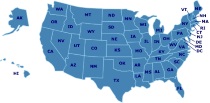
Looking for Another State?
Featured Resources
As an Amazon Associate, we earn from qualifying purchases. We get commissions for purchases made through links on this site.

Conquering Chronic Disorganization
The real-life stories of chronically disorganized people and the ground breaking, easy-to-learn organizing methods used to end their chronic disorganization in the area of residential clutter, office organizing, paper management, storage, and time ma...

Discover Your Children's Gifts
This comprehensive work on children's learning styles and creativity expression is a tremendous help to parents as they begin homeschooling. The authors discuss how God gifts children in different ways with different ways of learning and expression. ...
Learning Language Arts Through Literature
Learning Language Arts Through Literature is a fully integrated language arts program that teaches grammar, reading, spelling, vocabulary, writing mechanics, creative writing, thinking skills and more.

When Children Love to Learn: A Practical Application of Charlotte Mason's Philosophy for Today
Children want to learn and one of the best approaches to homeschooling is to meet their natural curiosity with support and understanding. Charlotte Mason's educational philosophy does just that. This book offers explanations of how to incorporate Mas...
English from the Roots Up
English from the Roots Up explores the Latin and Greek roots of words. Many people haven't realized how valuable the Latin and Greek vocabulary is in the formulation of the finely structured English vocabulary of today. Even learning a few Latin and ...